Watch a child meet something well made. They slow down. They run a hand along an edge, push the door to see how it swings, crouch to look through the window at the room they were standing in a moment ago. Before they play with it, they have a conversation with it.
That conversation is where imagination begins. It is also the reason we spend so long on the design of every DUDUK house.
Most play spaces never start the conversation
The usual choices are plastic or fabric. A moulded plastic house arrives finished: its colours decided in a factory, its windows fixed in place, its story already told. A play tent sags the first time a child leans on it and is folded away the moment it is in the way. Both are made to be cheap and to sell quickly. Neither asks a child anything, so the child has nothing to answer, and the play runs out.
Design that asks questions
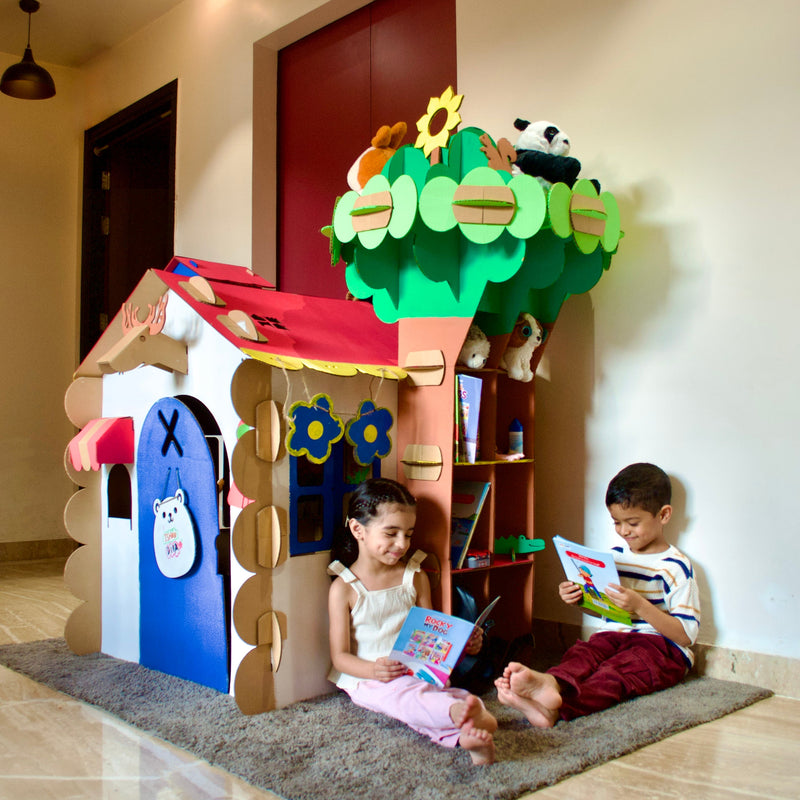
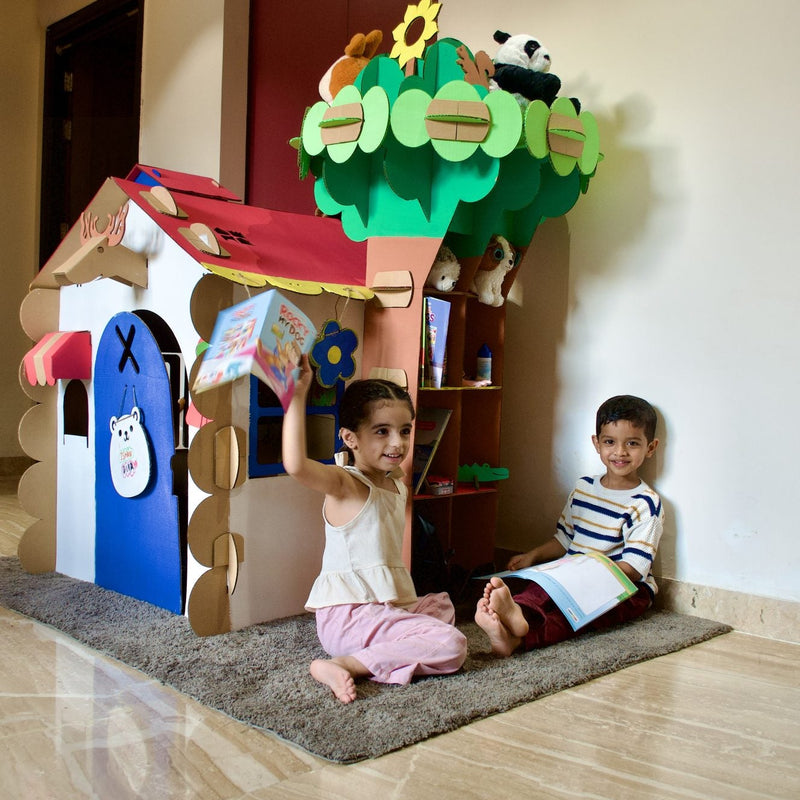
A DUDUK house is drawn at a child's scale, and every detail on it is a question. A window box asks what they will grow. A porthole asks where the rocket is going. A shop front asks what is for sale today. A bookshelf in the branches of a tree asks which story comes next. Children answer with paint and paper, soft toys and friends, and the house becomes whatever the answer is.


The most generous thing we left out
The most important part of a DUDUK house is what is not on it. No cartoon characters, no slogans, no colours chosen on a child's behalf. We spend our care on the proportions, the doorway and the way light falls through a cut-out window, and we leave the walls blank on purpose. A blank wall is an invitation, and children always accept.
Proportion, light and a door that opens
A child should be able to stand in the doorway, sit inside with a friend and still see out. The Rocket rises to 170 cm, taller than most parents' shoulders, so it feels like a vessel rather than a box. The Tree House has a life-size tree growing beside it. These are details adults notice later. Children feel them at once, and play differently because of them.


A piece for a beautiful room
For families who care how a home looks, a toy is part of the room. A DUDUK house arrives in natural kraft tones with clean lines, sits as easily in a living room as a good chair, and slowly fills with the colours of the child who lives in it. It slots together without screws or tools, and when its story is finished, the board is fully recyclable.
The conversation keeps going
Good design does not stop on delivery day. Repaint the walls, string buntings across the door for a birthday, plant painted flowers in the window box, draw the curtains for a den. Each change is the child answering the design, and the design asking something new. That is what we mean by imagination: not a toy that entertains, but a space that keeps a child thinking.
Meet the houses: the Cubby House, the Tree House, the Rocket and the Shop.
Related: wondering what a DUDUK house is made of? Read an eco-friendly playhouse: the material, the paint and what comes after play.
Because imagination is the fastest way to grow.