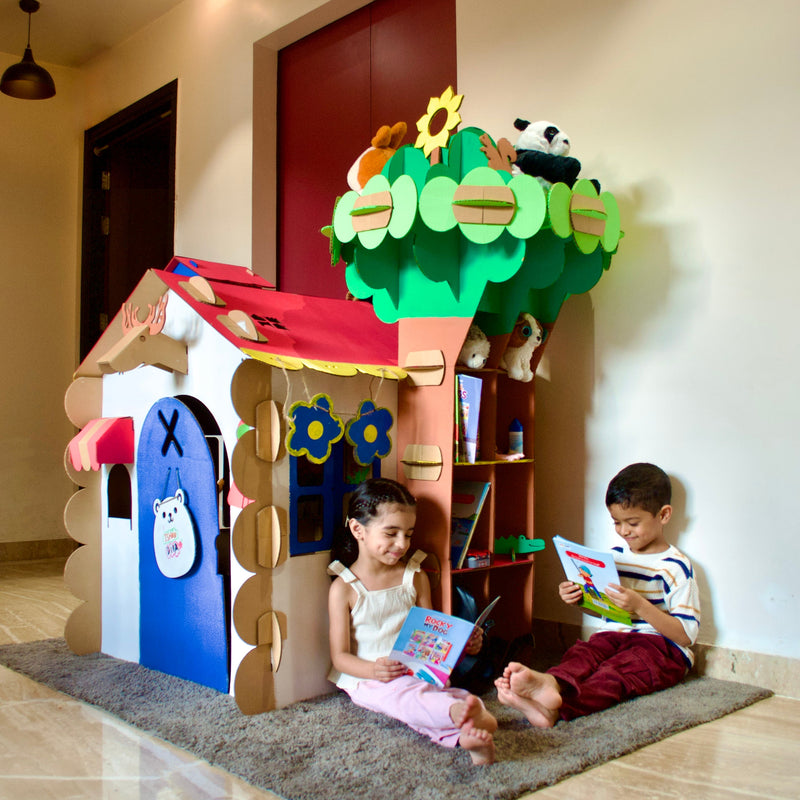
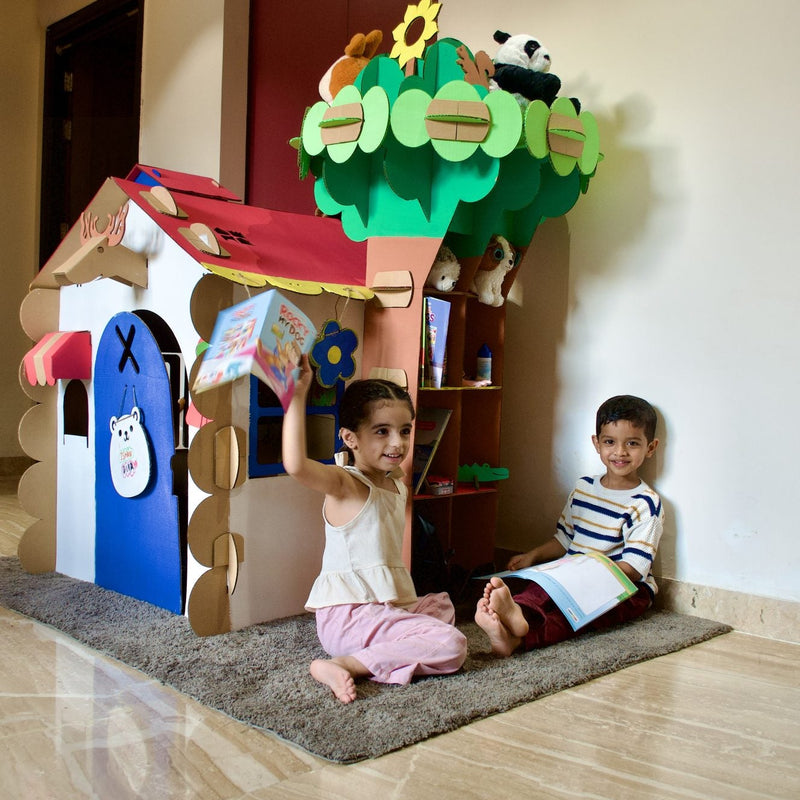
Most homes with young children have plenty of books and very little reading. The books live on a high shelf or in a box, and getting one out is a job. A reading corner fixes that by making books the easiest thing in the room to reach.
1. Pick a corner, not a room
You don't need a spare room. Choose a quiet corner away from the TV, ideally near natural light during the day. Corners feel enclosed, and children like a nook more than open floor.
2. Put the books at their height
This is the single biggest change. Books should be at a child's eye level, with covers facing out where you can manage it. A child picks a book by its cover long before they read the spine.

The DUDUK Tree House was designed around this idea. A bookshelf runs up the tree beside the house, so picture books live at exactly the height small hands reach.
3. Fewer books, changed often
A full shelf is harder to choose from than a short one. Keep 8 to 12 books out and swap a few every week or two. Bring back old favourites with the new ones.
4. Make it soft
A rug, a couple of cushions and something to lean against are enough. Children read sprawled on the floor more often than sitting upright.

5. Give it a door
A space that feels like a den gets used more. A playhouse turns a corner into a room of their own, with walls to lean on and a doorway to read in. Our guide to playhouses in small apartments shows how little floor you need.
6. Light it well
Daylight by day. In the evening, a warm lamp nearby that an adult controls, or battery fairy lights strung over the shelf. The Bird Hooks slot into any DUDUK wall and hold them nicely.
7. Read there yourself
Children copy what they see. Ten minutes in the corner with your own book, or reading theirs aloud, does more than any shelf.
Keep it theirs
Let them name the corner, make a sign for it and choose which books go out each week. When the corner belongs to them, they go back to it.
See the Tree House, or browse all playhouses.
Because imagination is the fastest way to grow.